
One of my big issues with capitalism is it propels the most extroverted individuals to the top. As is so evident from business and politics, that’s often a bad thing.
Now, many extroverted people are fantastic and offer a great deal of energy and positivity to the world.
But there’s also a big sect of self-absorbed egoists mouthing off and feeling all smug about themselves whilst running the show. The knock-on effects are disastrous in the long-term for myriad reasons.
Especially since the 2008 recession, the chronic individualism of the business world promotes avarice and arrogance. That mindset isn’t going away any time soon, with everyone else forced into the extrovert way of life.
I’m sure I’m not alone in finding this whole business world façade exhausting. It requires so many falsities in behaviour—surface acting, manipulation, lying, insincerity. All bracketed under the guise of “professionalism” and we’re so far into this behaviour now everyone goes along with it.
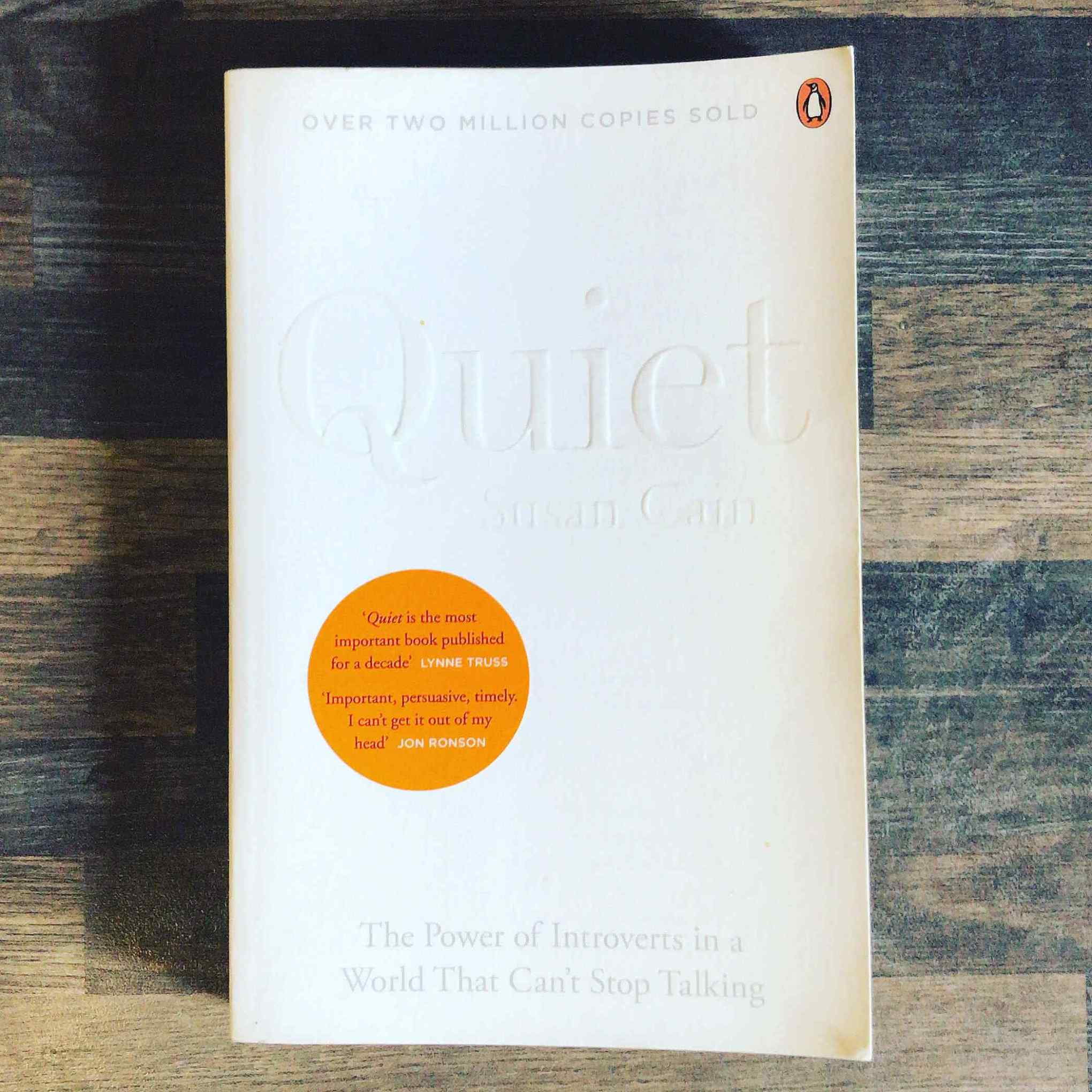
But introverts can still catch a break. Susan Cain’s Quiet launched in 2012 and has since sold over two million copies. As the overview on the back cover notes:
For far too long, those who are naturally quiet, serious, or sensitive have been overlooked. The loudest have taken over – even if they have nothing to say. It’s time for everyone to listen. It’s time to harness the power of introverts.
I’m taking a look at its important message, along with other insights on working life and the role introverts play in business and society.
Howdy! Sorry, I keep forgetting to finish this post, so I'll update and edit this over the weekend to finish it once and for all (01/03/2024)! 👍
Quiet: The Importance of Introverts in a World That Can’t Stop Talking
Extroversion VS introversion will be an ongoing battle. I’m summing up the warfare as Microsoft’s Windows ’95 launch that went viral in 2010.
In summary, you’ve got one extroverted Steve Ballmer trying to get a bunch of introverts (including Bill Gates) to “let loose” and do stuff that every introvert would normally run a mile from.
The awkward is off the charts. You can tell from the footage Bill Gates is very uncomfortable indeed.
You can just imagine the build-up to that show in 1995, with Ballmer forcing his big concept onto the introverts. “Yeah, we’ll play The Rolling Stones and work everyone up into a raging fervour! IT’LL BE AWESOME! YEAH! ROCK ON! WHOO!”
Susan Cain begins Quiet with a similar type of story.
Quiet by nature, the American writer and lecturer graduated from Harvard Law School in 1993. Then she worked for seven years as an attorney, followed by a negotiation consultant.
Her story in the introduction details how her clients, in the hurly burly extroverted world of legal land, grew to rely on her introverted take on events as they preferred her measured way of dealing with situations.
But the legal world is high stress, high drama.
Cain left the industry to work as a writer, all in pursuit of a quieter life and a chance to spend more time with her family.
Although it’s over a decade since Quiet launched, its legacy is strong. It’s essentially the shy person’s Bible, something to lug around and wave angrily in the face of loud people.
But seriously, I’m going to take a look below at its core messages and how we can all strike a balance between personality types to achieve greater productivity.
Notes on the Extrovert Ideal
That was Cain’s announcement to the world in 2012. And she’s right—for a very long time, it felt like it was just plain wrong to flag up you’re an introvert.
Around the time her book came out, we remember seeing “advice” from a recruiter regarding promoting yourself to businesses. Paraphrasing here, “Don’t include pictures of books on your LinkedIn profile, it’ll suggest you’re quiet.” Now, we work in the hurly burly world of digital marketing as content writers.
Until recently, when remote work became normalised (at long last), you could tell businesses had no idea what writers needed in an office.
Often, along with my writer colleagues I was stuffed next to the brash, loud environment of the sales department (whooping, yelling, and playing music all day long).
You’ve got to somehow deliver your best work, alongside many other interruptions office-based interruptions, or face the wrath of a business unwilling to let you work in a more productive environment.
It flags up a wider issue for me.
There’s no escaping the louder and more self-promotional you are, the better you’ll do in the “big beautiful business world” (as we’ve seen various people describe it across their social media channels).
The Extrovert Ideal is an excellent term, one coined by Cain in this book. It appears from page 4, with the writer noting:
Closet introverts pass undetected on playgrounds, in high school locker rooms, and in the corridors of corporate America. Some fool even themselves, until some life event—a layoff, an empty nest, an inheritance that frees them to spend time as they like—jolts them into taking stock of their true natures …
It makes sense that so many introverts hide even from themselves. We live with a value system that I call the Extrovert Ideal—the omnipresent belief that the ideal self is gregarious, alpha, and comfortable in the spotlight. The archetypal extrovert prefers action to contemplation, risk-taking to heed-taking, certainty to doubt. He favors quick decisions, even at the risk of being wrong. She works well in teams and socializes in groups. We like to think that we value individuality, but all too often we admire one type of individual—the kind who’s comfortable “putting himself out there.” Sure, we allow technologically gifted loners who launch companies in garages to have any personality type they please, but they are the exceptions, not the rule, and our tolerance extends mainly to those who get fabulously wealthy or hold the promise of doing so.
As she then highlights:
Introversion—along with its cousins sensitivity, seriousness, and shyness—is now a second-class personality trait, somewhere between a disappointment and a pathology. Introverts living under the Extrovert Ideal are like women in a man’s world, discounted because of a trait that goes to the core of who they are. Extroversion is an enormously appealing personality style, but we’ve turned it into an oppressive standard to which most of us feel we must conform.
This is correct. I’ve met various individuals over the years who appear extroverted, but have confided in me they’re more introverted than people realise.
That includes an employer at a digital agency, some friends, and a sibling.
On a wider scope, you can consider famous personalities such as Freddie Mercury. Wildly extroverted and flamboyant on stage, many viewing him would have expected much the same off stage.
However, it was very shy and retiring. He led an extremely private life and was awkward in social situations, relying on alcohol and drugs to become more open. Other big names in these ultra-extroverted industries did the same, including Oliver Reed, Keith Moon, Graham Chapman, Janis Joplin, Jim Morrison, and many more.
In the more formulaic world of business, it’s that need to put on a performance (surface acting) across working life I find tedious. Three individuals from job interviews I’ve had over the years stick in my mind. The interviewers were surface acting their way through with false smiles and feigned interest. It’s so disingenuous I found it massively off-putting.
Another one was a boss who was there in the interview.
For my then current role, I mentioned how I’d like to head into work earlier if I could (as I wake up early and starting at 9am is a waste of a morning) and in a split second he barked back, “So why don’t you then?!”
Just the reasoning in his mind made me not want to work there. The impulsive entrepreneurial spirit, the lack of logic behind it, the strained expression on his face as if he’d landed a key moment in the interview I had to navigate (when I’d already abandoned ship on that one). And here’s why I didn’t head in earlier:
- In my contract of employment the hours were designated and were non-negotiable.
- UK Working Time Regulations mean no one can work more than 48 hours a week.
- The building where the office was located had its doors locked until 9am.
In this instant, I’ll have annoyed the boss with my attitude—the lack of bravado and impulsivity (the wage was absolute crap, incidentally, so he was expecting the usual turn up to work my backside off to make him rich for very little reward).
As you might be able to tell, he very much indeed annoyed me, too.
There is a great deal of impatience I’ve faced from businesses expecting an “out there” personality from the off. Several employers have just flat-out refused to accept my quieter way of doing things was acceptable.
It does make job applications doubly difficult as you’re looking for the right environment, when many in marketing expect an extroverted nature.
But I want to be fair. I’ll take a look at how extroverts think and then balance that out with insights from Cain’s work.
Extroverts VS Introverts: Balancing Out Different Values
To get started with this I did a Google of “how extroverts think”. This led to a description of:
“They have a strong desire to be organized and logical at all times and they are very effective at getting people to work as a unit to accomplish a task.”
Extroverts are often:
- Happy to share their feelings readily.
- Enthusiastic.
- The life-and-soul of any environment.
- Talkative and action-orientated.
- Very sociable and eager to interact regularly.
At first, they can come across as wildly charismatic. They’re the people who put themselves out there and their outgoing nature can be enormously appealing.
On the flip side this can be viewed as attention-seeking, loud, irritating, and they can have serious problems spending time alone. The COVID-19 pandemic highlighted this, with many an extrovert easy to bore of the solitude.
Meanwhile, introverts are often:
- Reserved and quiet
- Think before speaking.
- Dislike small talk.
- Don’t like parties.
- Internally highly focussed.
- Absorbed in their own thoughts.
In turn, introverts can have serious self-doubt (imposter syndrome), tire in social situations, and aren’t necessarily the best at leading people.
When you’ve got personality traits as different as that, it’s no big surprise there’s often a clash. Especially for extrovert business owners, who may view quieter members of staff as less motivated.
From our experience, it’s the extroverts who get the promotions and are favoured by employers.
I once even had a very extroverted employer of mine, on a live meeting in front of almost all the business, say to me “you’re always quiet anyway”. This particular employer’s impulsivity was enough to eventually make me leave the business after a year.
Susan Cain challenges the “myth of charismatic leadership” in chapter two.
At the onset of the Culture of Personality, we were urged to develop an extroverted personality for frankly selfish reasons—as a way of outshining the crowd in a newly anonymous and competitive society. But nowadays we tend to think that becoming more extroverted not only makes us more successful, but also makes us better ppeople. We see salesmanship as a way of sharing one’s gifts with the world.”
In chapter three she also criticises how collaborate work “kills creativity” and how working alone is just as effective as relying on colleagues.
Notes on the Commute and Working From Home
Discussing WFH (remote work) here seems essential, as the very idea of it seems to be appalling for superrich business owners to contemplate.
It always seems to be white, overprivileged, 5o+ men who complain about “snowflakes” and “the woke mob” who have this colossal issue with better work-life balance.
After COVID-19, working from home had a brief spell as the norm.
However, in our hard-right capitalist societies (thinking of the UK and US here) the backlash emerged. Hybrid working offered a compromise. But many business owners now just expect their employees to commute in every day, at incredible annual costs, during a well-documented and major cost of living crisis.
This is despite the vast amount of data that showcased remote workers are more productive.
And this means businesses are actively forcing employees into the office, even though it means the productivity won’t be as good… all to exercise some good old-fashioned paranoid control over a workforce.
It’s really baffling for me. If I ran a business my policy would be to let staff choose where they want to work. Wherever suits them best.
Extroverts, naturally, often prefer being in the office.
Introverts will typically be the opposite, as forcing an introvert through three or more hours of commuting every day is a fantastic way to annoy them and lower the quality of their work.
It’s a control issue. Here in England, we have a Conservative government that thinks remote work equals laziness and lack of productivity. The Tory propaganda has incentivised businesses to take an on-site approach (even though it doesn’t do many of them any favours, given how horrendous the prices are for renting office spaces across the UK).
It’ll be interesting to see how this develops in future.
I applied to one role recently and was told it was hybrid only (the role being down south and not commutable), with the recruiter telling me the business and its employees had collectively decided it was what they all wanted.
Yeah, right. What he meant was higher management had eventually met a compromise to allow for some WFH days. This does, for me, just seems like a trust issue. And I do find it bizarre if you’ve gone to the effort to hire someone, to then have zero trust in them is just paranoia on a the most inane levels.
Lots of businesses still offer remote work, of course, and reap the rewards:
- Better productivity.
- Happier employees.
- Staff retention.
- Positive PR.
- High profits.
But the propaganda tells us remote workers shirk their duties and sit about watching Netflix while eating crisps. Or that it’s making employees depressed and lonely.
Going Concern highlighted how idiotic some of this propaganda is in June 2023. In the funniest anti-WFH propaganda you’ll see it states:
“UK office furniture company Furniture at Work has published a hilarious anti-WFH piece called ‘From Claw Hands to Hunchbacks: How Working From Home Could Affect Our Bodies.’ The article warns that if you continue to work from home you will end up looking like an enemy from Silent Hill by the time you are 70. The company, which definitely isn’t biased at all given that their entire livelihood depends on the sale of office furniture, ‘sourced scientific research and worked with health experts to fully explore the potentially damaging health effects of working from home’ and then worked with a 3D designer “to create a future human whose body has physically changed due to consistent use of laptops and smartphones, poor posture, and an unhealthy diet.”
“Could Anna be the future of remote working?” they ask.”
Meanwhile, in a Forbes article, the publication claimed:
“Employees enjoy the freedom to work in the comfort of their homes, but the inherent human need for social interaction poses an unexpected challenge. Imagine a pendulum, swinging between the liberty to work in one’s preferred setting, and the longing for camaraderie that often draws us out of our cocoons. This balance, delicate yet pivotal became the crus of the evolving work land.”
That was flagged up on Reddit and as one user noted:
“What’s so weird is we saw millions of white collar jobs off-shored for decades and the inherent human need for social interaction didn’t pose any unexpected challenges at all. But then one little Commercial Real Estate Crisis comes along and suddenly we all need eye contact.”
In reality, since I started WFH I’ve lost a tonne of weight and I’m happier and more productive than ever. That’s thanks to all the extra free time and the lack of control-freak nature commute.
But then, of course, businesses have spent a lot of money on expensive real estate and don’t want it sitting there empty. So this means staff have to trash £2,000 p/a on their annual commuting for no reason to satisfy loaded bosses.
Japan’s Take on Business Life
As I’ve covered on various Japanese texts on Moonshake Books (for example, A Monk’s Guide to a Clean House and Mind), I’m a big fan of how life is structured in Japan.
Not wishing to stereotype too much, but Japanese come across as enormously disciplined, dedicated, modest, and polite. Excess isn’t encouraged as it is here.
In A Monk’s Guide, there’s a story of a business owner bringing his employees to the monk’s monastery regularly to perform mundane sweeping tasks. All for the therapeutic discipline of it.
In the West, we have people spending $10,000 a go to attend one of Tony Robbin’s extrovert classes. Some of his activities at the events include walking across hot ashes. Robbins is a motivational speaker and notable extrovert. On his videos he makes claims such as, “This is why 4% succeed and 96% fail” (referring to wealth, naturally).
Here he is in action.
Nippon follows collective capitalism (pretty much the only nation in the world that does).
The nation’s take on this is for cooperation and “friendly” business competition. This means there isn’t as much hostile takeovers as we see in the west. Business owners are expected to succeed, but there’s a far greater emphasis on helping others (rather than just themselves).
But it’s not a socialist system, to be clear, it’s just one where loyalty and hard work are often rewarded with a job for life (something that just doesn’t exist anymore in Western capitalism).
On a tangent here, it’s interesting to note Japan’s cleaning policy. Fire fighters, for example, will finish their shifts and then clean the workplace as an act of self-discipline.
Critics of this system suggest it demands long working hours from employees, with added stress and what the Japanese now call karōshi (過労死—death by overwork).
Japan is often portrayed as a kind of modern day utopia where they’ve got everything right. When that isn’t the case at all and, as with every nation, it does have its problems. Suicide rates in the country are very high and, it’s argued, a lot of that is due to overwork.
Suicide due to overwork is called karōjisatsu (過労自殺).
The response from many businesses has been to address work-life balance.
Nissan, for example, offers remote work for a better balance. And other businesses have a “no overtime days” to restore some balance. In 2o17, the Japanese government even launched Premium Friday, which expects businesses to let employees leave for the weekend at 3pm.
Just to note, this overwork issue is also noted in America, China, India, South Korea, and Sweden.
The Future of Introversion in a Hard Capitalist Society
Since the launch of Quiet, we don’t think things are getting better for introverts. The Extrovert Ideal is as strong as ever. Competition between businesses is fierce and the battle for jobs, no matter how lowly, even worse.
Back in 2005, during an end of semester break from university, I applied for a job at ASDA (a supermarket chain we have here in England). It ended up being a group interview. I didn’t know that beforehand, but it struck me immediately as I walked into the specially prepared room with my contestants to the sound of Queen’s A Kind of Magic (a song I love, just not in that situation).
I can recall the interview very well. Multiple assessors sat around us as we interacted.
There’s no denying I bombed. In that setting I was useless. I made note of the more extroverted candidates and the ease in which they slipped into this role. Including one charismatic guy who later got one of the jobs and I saw him working at the bread counter.
The surface acting now gone, he looked as glum as a they come and all the fake smiles had disappeared. The interviewers, clearly, were susceptible to the charms of bullshitting for the Extrovert Ideal.
And I feel it’s much the same name. Confidence will get you far in interviews. You need to stand out and if you can blag it one, you’ve got a much better chance.
So it’s tempting to conclude Susan Cain’s message, while most welcome and timely, just hasn’t been incorporated into a capitalist society utterly obsessed with money (and very little else).
